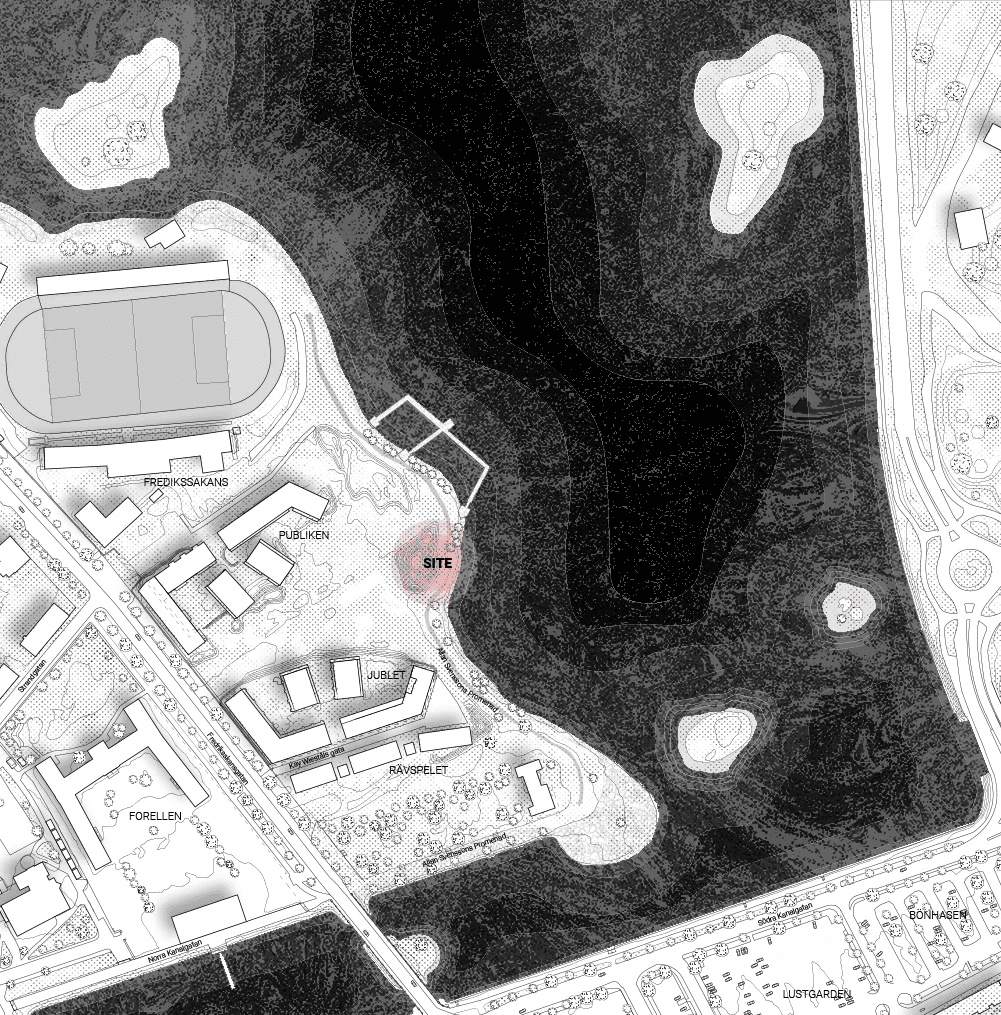
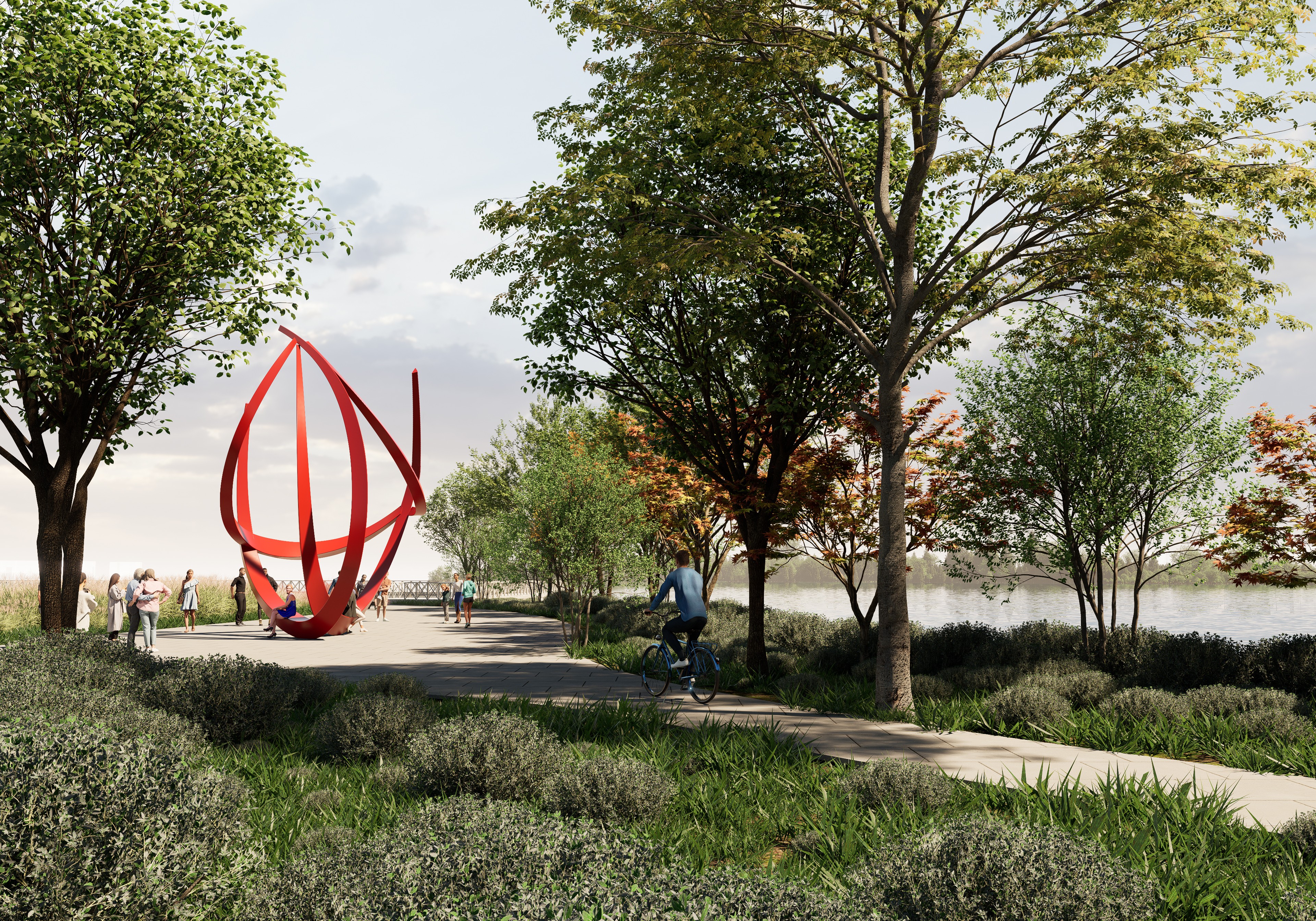
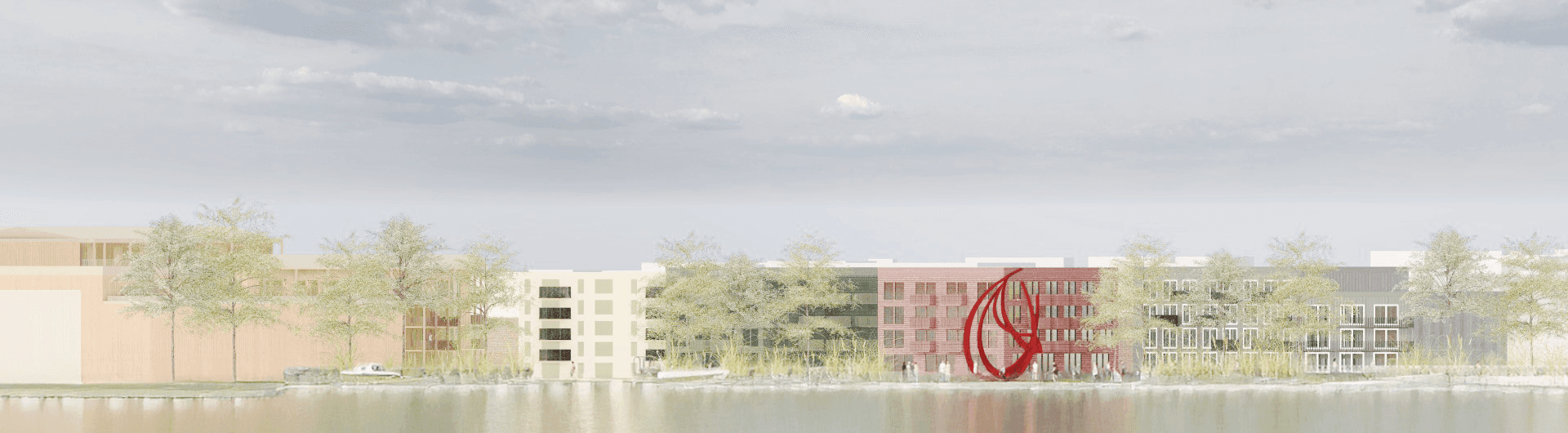
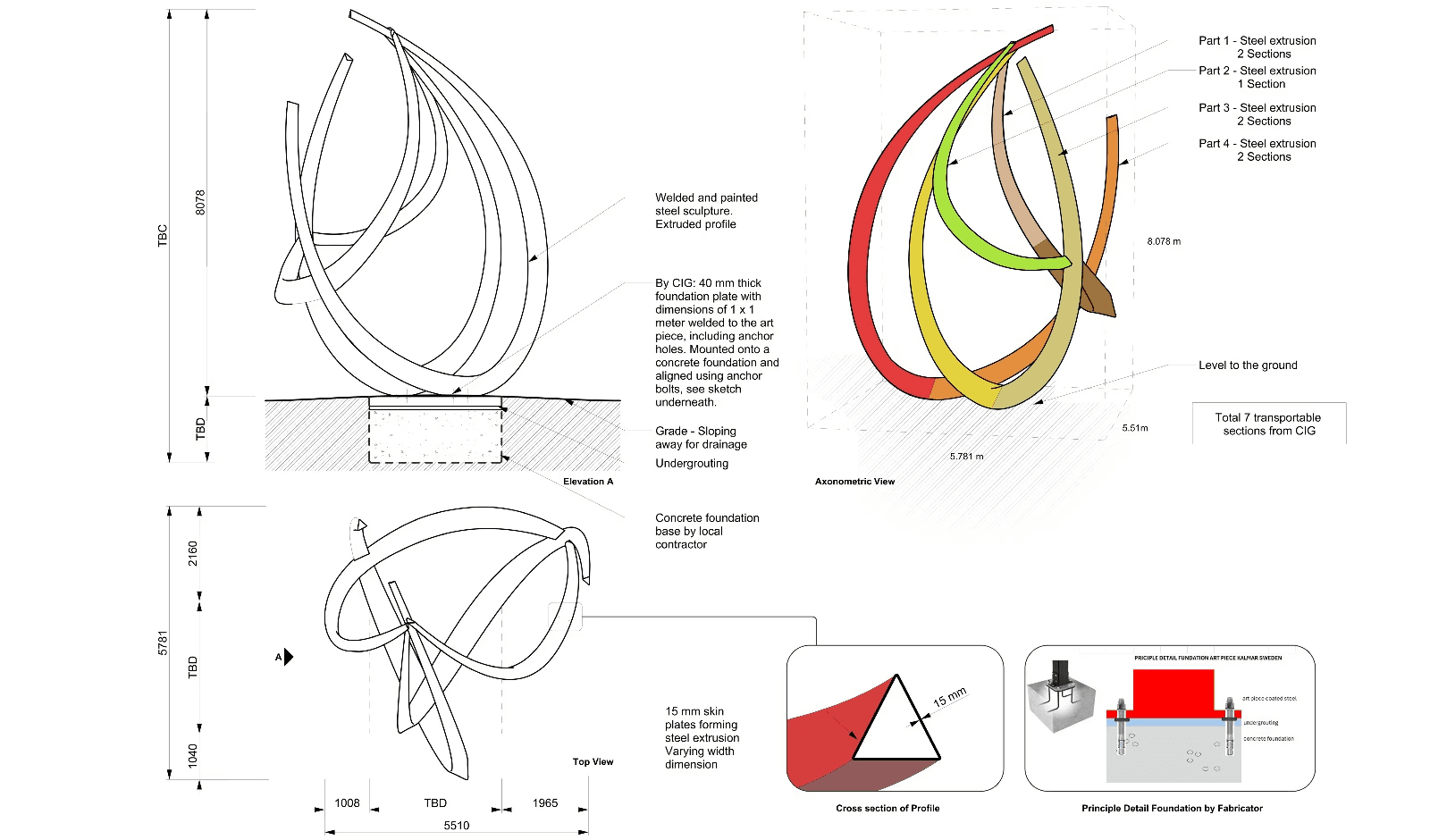
CONCEPT Gate of Water rises like the ribs of a ship and the sweep of sails, capturing wind, tide, and memory in one flowing form. Its open frame gathers light and landscape into the work, so that it is never static but continually renewed by its setting. Nearly nine meters high, the sculpture stands as a threshold—at once vessel and gate—inviting people to step inside, to pause, and to see the world reframed. It draws on Axel Svensson’s memory of the brigs Saga and Hugo as a poetic reference and inspiration.
“The two ships were a sight for gods, a sight I will never forget, they lay there like shimmering naiads… the most beautiful sight a sailor’s eye could ever see.”
Poised between stillness and motion, strength and grace, the sculpture carries that vision into Kalmar’s present. Gate of Water offers a place of belonging shaped by water and a representation of material innovation of its time.
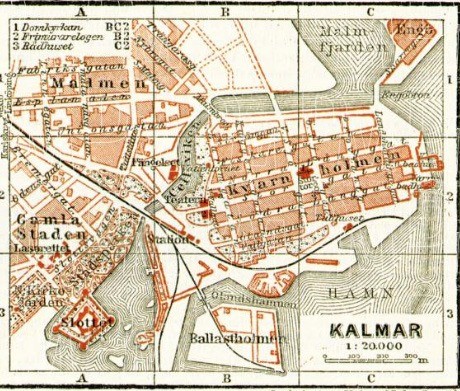
HISTORY Kalmar’s history has been shaped by its relationship with water. The Kalmarsund strait defined Sweden’s connection to the Baltic, drawing in early settlers. By the 12th century, a tower and later the castle guarded the harbor’s lifelines of trade. The oldest known Swedish city seal, created between 1255 and 1267, already marked Kalmar with towers above and water below: walls for protection, water for connection.
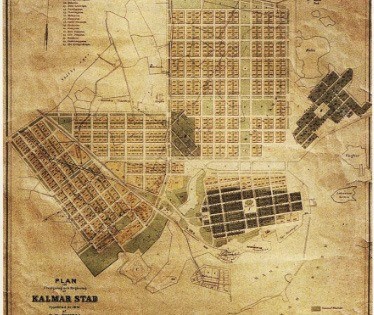
Grain, timber, iron, and tar departed from the port, returning as salt, cloth, and wine. Yet water also carried threats—raids, sieges, and blockades that tested the castle’s defenses. In 1397, Kalmar’s harbor became the stage for Nordic politics with the signing of the Kalmar Union. By the 17th century, exposure forced the crown to shift the city to Kvarnholmen, rebuilt as a fortress-town where every street led to the sea.
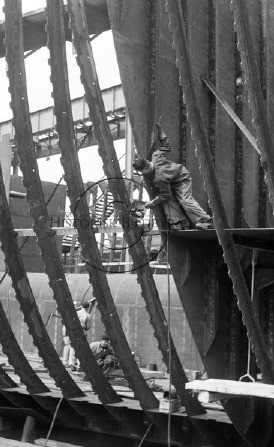
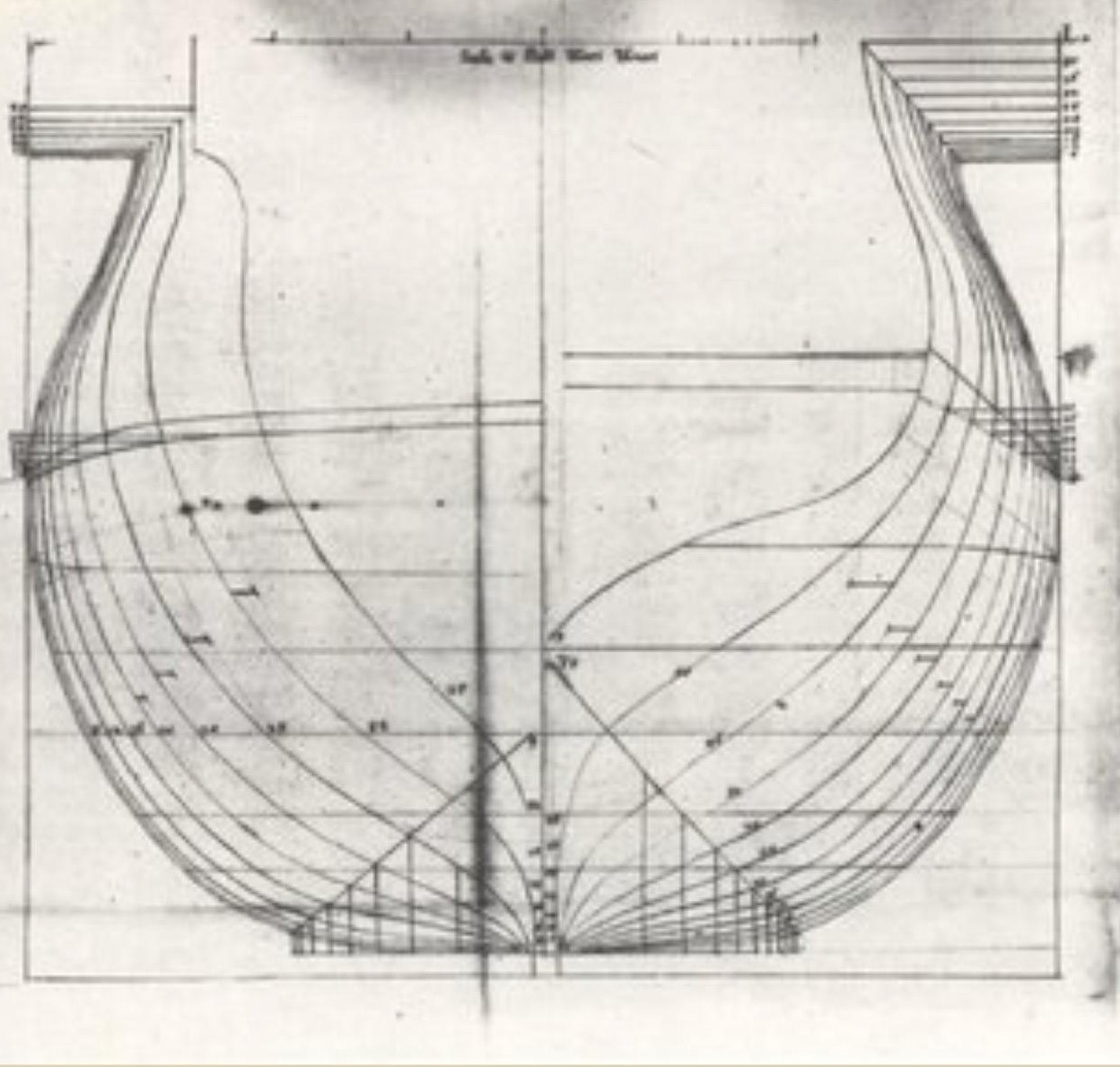
Equally defining were Kalmar’s shipyards, where oak and pine from Småland were shaped into vessels of trade and war. Merchant brigs such as Saga and Hugo embodied the city’s maritime grace and labor. These ships, poised between strength and fragility through innovation in engineering, continue to inspire Kalmar’s identity—and now shape the vision of Gate of Water.